14 January 2026
What Is Thekua? Bihar’s Traditional Festival Sweet Explained
Discover Thekua, a traditional sweet from Bihar made with wheat flour and jaggery. Learn its origin, cultural importance, recipe, and shelf life.
Introduction: What Is Thekua?
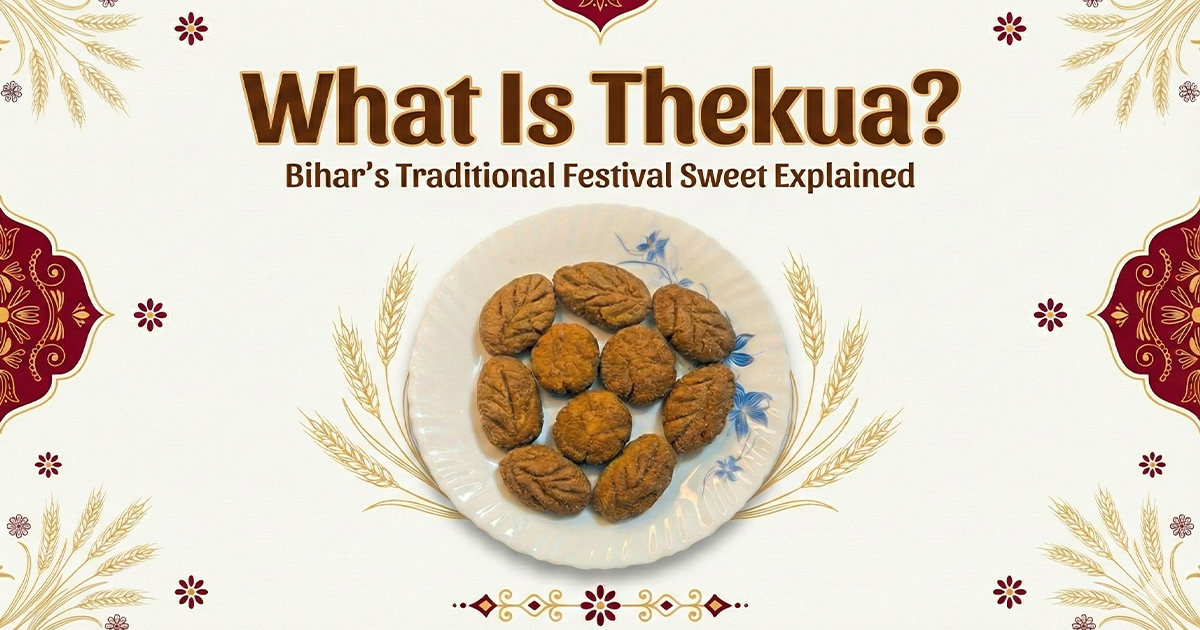
Thekua is a traditional Indian sweet known for its crisp texture, rich aroma, and deep cultural roots. Prepared mainly from whole wheat flour, jaggery, coconut, and ghee. Thekua originates from the eastern Indian state of Bihar.
Simple in ingredients yet profound in meaning, Thekua is more than a dessert—it is a symbol of devotion, tradition, and heritage. Most famously, it is prepared during Chhath Puja and offered as sacred prasad, making it one of the most spiritually significant sweets in Indian culture.
The History and Origin of Thekua
Where Did Thekua Originate?
Thekua traces its roots back to rural India, where it was created as a nutritious, energy-rich food that could last for days without refrigeration. Farmers and travellers relied on it because it required no refined sugar, no preservatives, and minimal cooking tools.
Over generations, what began as a practical food evolved into a sacred offering. Its long shelf life and purity made it ideal for religious rituals, particularly Chhath Puja, where only homemade, sattvic foods are permitted.
Cultural and Religious Importance
Thekua represents gratitude, discipline, and devotion. In many households, its preparation is a family ritual involving elders passing down recipes orally. The act of making Thekua is considered as important as offering it—strengthening family bonds and preserving ancestral knowledge.
Ingredients Used in Thekua
Main Ingredients
- Whole Wheat Flour – Forms the base and gives structure
- Jaggery (Gur) – Natural sweetener with deep, caramel-like notes
- Grated Coconut – Adds texture and mild sweetness
- Cardamom – Provides warmth and aroma
- Ghee – Used for frying, enhancing flavor and authenticity
Optional Add-Ins
- Chopped dry fruits like cashews or almonds
- Sesame seeds for added nutrition and a nutty flavour
How to Make Thekua at Home
Step-by-Step Traditional Thekua Recipe
- Mix Ingredients – Combine wheat flour, grated coconut, crushed jaggery, and cardamom
- Prepare the Dough – Add water gradually to form a firm, smooth dough
- Shape the Thekua – Make small discs or press with a traditional wooden mould
- Fry in Ghee – Deep-fry on medium heat until golden brown and crisp
- Cool and Store – Allow to cool completely before storing
How long does Thekua last? Properly stored in an airtight container, Thekua lasts 10–15 days at room temperature.
How Does Thekua Taste?
Thekua has a mildly sweet, nutty flavour with warm jaggery undertones. Its outer crunch contrasts beautifully with a dense, slightly crumbly interior. Interestingly, the flavor deepens after resting for a few hours, making it even tastier the next day.
Why Thekua Is Considered a Healthier Traditional Sweet
- Sweetened with jaggery instead of refined sugar
- Made using whole wheat flour
- No artificial preservatives
- Provides slow-releasing energy
- While it is deep-fried, consuming Thekua in moderation makes it a better alternative to many modern processed sweets.
Serving Suggestions: How to Enjoy Thekua
- As a festival dessert
- With tea or coffee as an evening snack
- As prasad during religious ceremonies
- As a travel-friendly homemade sweet
Why Thekua Remains Popular Today
- Deeply rooted in tradition and devotion
- Uses simple, natural ingredients
- Long shelf life without preservatives
- Strong emotional and cultural connection
- Even in modern kitchens, Thekua continues to be prepared the traditional way, preserving its authenticity and meaning.
Frequently Asked Questions About Thekua
What is Thekua made of?
Thekua is made from wheat flour, jaggery, coconut, cardamom, and ghee.
Why is Thekua prepared during Chhath Puja?
It is considered pure, homemade, and long-lasting, making it ideal as sacred prasad.
Is Thekua a healthy sweet?
Compared to refined sugar sweets, Thekua is healthier due to jaggery and whole wheat flour.
Can Thekua be baked instead of fried?
Yes, it can be baked for a healthier version, though the texture may differ slightly.
Conclusion: Thekua Is More Than Just a Sweet
Thekua is not just a traditional Indian sweet—it is a reflection of faith, culture, and simplicity. From its ancient origins in Bihar to its presence in homes across the world, Thekua continues to connect generations through taste and tradition. Whether enjoyed during festivals or as a homemade snack, its legacy remains timeless.
More to read