15 March 2026
Handmade vs Factory-Made Sweets: What's Truly Better?
Handmade vs factory-made sweets: compare ingredients, taste, shelf life, and value so you can choose better Indian sweets for your home and family.
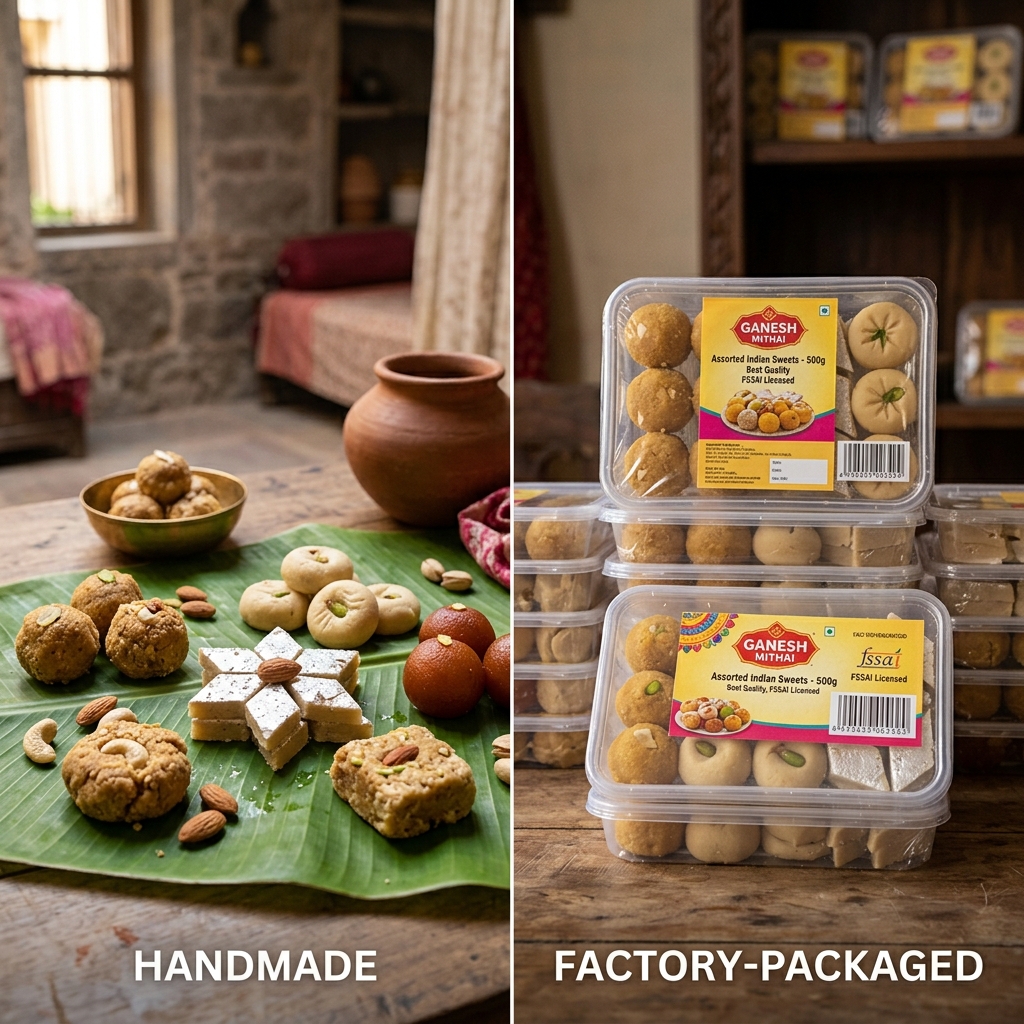
There is a moment every Indian has experienced. You open a box of factory-packed sweets, they look perfect — uniform shapes, identical sizes, glossy finish. Then you taste one. It is fine. Edible. But forgettable. Now compare that to the ladoo your aunt pressed together with warm hands last Diwali. It was slightly lopsided, a bit crumbly. But it tasted extraordinary. Why does that happen?
Direct answer: handmade sweets are usually better for ingredient quality and taste, while factory sweets win on convenience and long shelf life. For handmade vs factory-made sweets comparison, your best choice depends on what you value more: speed or authenticity.
In many homes, this balance is described as shudd swad with a moms made warmth that feels familiar and honest.
Handmade vs Factory-Made Sweets: Ingredient Comparison
The biggest difference between handmade and factory sweets is not craftsmanship — it is ingredients. Factory production optimises for cost, shelf life, and consistency. Handmade production optimises for taste.
- Factory ghee is often vanaspati or a ghee-oil blend. Handmade sweets use pure desi ghee.
- Factory sugar is always refined white. Traditional recipes favour jaggery or raw sugar.
- Factory flour is typically refined maida for uniformity. Handmade versions use whole wheat or besan.
- Factory flavours come from synthetic essences. Handmade sweets rely on real cardamom, saunf, and coconut.
When you read a factory sweet's ingredient label, count the items you cannot pronounce. That count tells you exactly how far it has travelled from a real kitchen.
Texture and Taste: Where Machines Fall Short
Machines are excellent at consistency. Every piece looks the same. But taste is not about consistency — it is about character.
- Hand-kneaded dough develops gluten differently, creating a chewier, more satisfying texture.
- Hand-frying in small batches allows the cook to adjust heat in real time. Machines cannot do this.
- The slight irregularities in handmade sweets — a thicker edge here, a deeper colour there — create micro-variations in flavour with every bite.
Factory sweets taste the same from first piece to last. Handmade sweets surprise you. That surprise is what your palate remembers.
The Shelf Life Trade-Off
Factory sweets last months. Some packaged mithai sits on shelves for a year. This is not a feature — it is a warning. Sweets that last that long need preservatives, stabilisers, and sometimes modified atmosphere packaging.
Handmade sweets, especially preservative-free ones, last days to weeks. This shorter shelf life is actually proof that real ingredients were used. Fresh ghee goes rancid. Real jaggery ferments. That is nature confirming your food is genuine.
Why Handmade Costs More (And Why It Should)
The price gap between handmade and factory sweets confuses many buyers. Why pay more for something that looks less polished?
- Real ghee costs 3-5x more than vanaspati
- Small batch production means higher per-unit labour cost
- Quality jaggery is more expensive than bulk refined sugar
- No preservatives means faster production-to-delivery cycles
You are not paying more for imperfection. You are paying for integrity. Every rupee goes into what is inside the sweet, not what is on the packaging.
How to Tell If Sweets Are Genuinely Handmade
- Look at the pieces. Slight size and colour variations are a good sign.
- Read the ingredient list. Fewer ingredients usually means more honest preparation.
- Check shelf life. If it lasts 6 months at room temperature, it is not handmade in any meaningful sense.
- Ask about batch size. Genuine small-batch makers will tell you exactly how they produce.
Frequently Asked Questions
Are handmade sweets always healthier?
Not automatically. But handmade sweets typically use fewer and better ingredients, which makes them a healthier choice in most cases. The absence of preservatives and artificial additives is a significant health advantage.
Why do factory sweets look more appealing?
Machines ensure uniform shapes and sizes. Some factories also use food-grade glazes and colour enhancers. This visual appeal does not correlate with taste or nutritional quality.
Where can I find genuine handmade Bihari sweets?
Look for brands that are transparent about their process and ingredients. Our handmade sweets are made in small batches with traditional recipes and no shortcuts.
The handmade vs factory question comes down to what you value. If you want convenience and uniformity, factories deliver. If you want taste that stirs memory and ingredients you can trust, handmade is the only answer. For more honest comparisons and food stories, visit our blog.
More to read