22 February 2026
Is Jaggery Better Than Sugar in Sweets? An Honest Answer
Is jaggery better than sugar in sweets? Compare iron, glycemic index, and calories — and get an honest answer for Indian home cooking.
Every Indian kitchen has this debate at least once: should we use jaggery or sugar? Your grandmother probably used jaggery. Your mother may have switched to sugar for convenience. And now social media is telling you jaggery is a superfood. The truth sits somewhere in the middle. Jaggery is a better choice than sugar in most sweets, but it is important to understand why — and what it cannot do.
Direct answer: jaggery is usually better than refined sugar in sweets because it retains minerals, though both are still sweeteners and should be limited. For jaggery vs sugar health comparison and jaggery vs sugar for diabetics, portion control remains essential.
For many people, the emotional benchmark remains that moms made taste and comfort.
What Happens When Sugarcane Becomes Sugar vs Jaggery
Both jaggery and white sugar start as sugarcane juice. The difference is in how much processing happens:
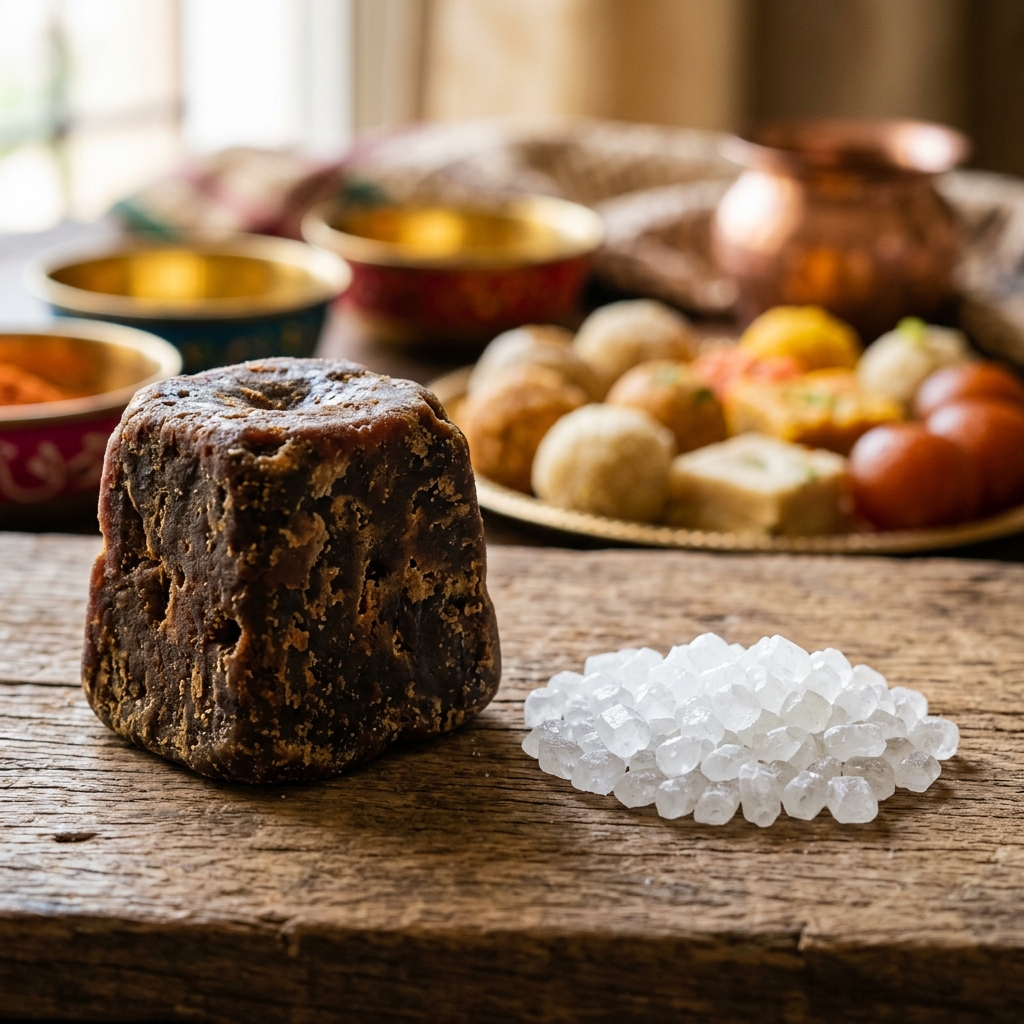
- Jaggery: sugarcane juice is boiled, concentrated, and set. Minimal processing. The molasses, minerals, and colour stay.
- White sugar: sugarcane juice goes through multiple rounds of refining, bleaching, and crystallisation. Almost everything except pure sucrose is stripped away.
Think of it this way: jaggery is sugarcane juice with a suntan. Sugar is sugarcane juice that has been through a chemical spa and came out with nothing but sweetness.
Jaggery vs Sugar Nutrition Facts: Calories, Iron, and Minerals
Here is what the numbers actually say per 20 grams:
- Jaggery: approximately 75 kcal, contains iron (0.5-1 mg), potassium, magnesium, some B vitamins
- Sugar: approximately 78 kcal, contains zero minerals, zero vitamins
The calorie difference is negligible. What matters is the mineral content. Jaggery is not going to replace your multivitamin, but over the course of a year, if every sweet you eat uses jaggery instead of sugar, those trace minerals add up. Iron is the biggest win. In a country where anaemia affects nearly 50 percent of women, every bit of dietary iron counts — even from your sweets.
Glycemic Index and Blood Sugar: The Truth
This is where most jaggery marketing gets it wrong. Jaggery still raises blood sugar. It is not a free pass for diabetics.
- Jaggery GI: approximately 65-85 (varies by type and purity)
- White sugar GI: approximately 65
- The difference is not dramatic enough to call jaggery "diabetic-friendly"
However, the fibre and mineral content in jaggery may slightly slow absorption compared to pure sugar. The effect is modest, not magical. If you are managing diabetes, the answer is not "switch to jaggery." It is "eat less sweetener overall," and when you do, jaggery is the marginally better option.
Why Traditional Indian Sweets Used Jaggery First
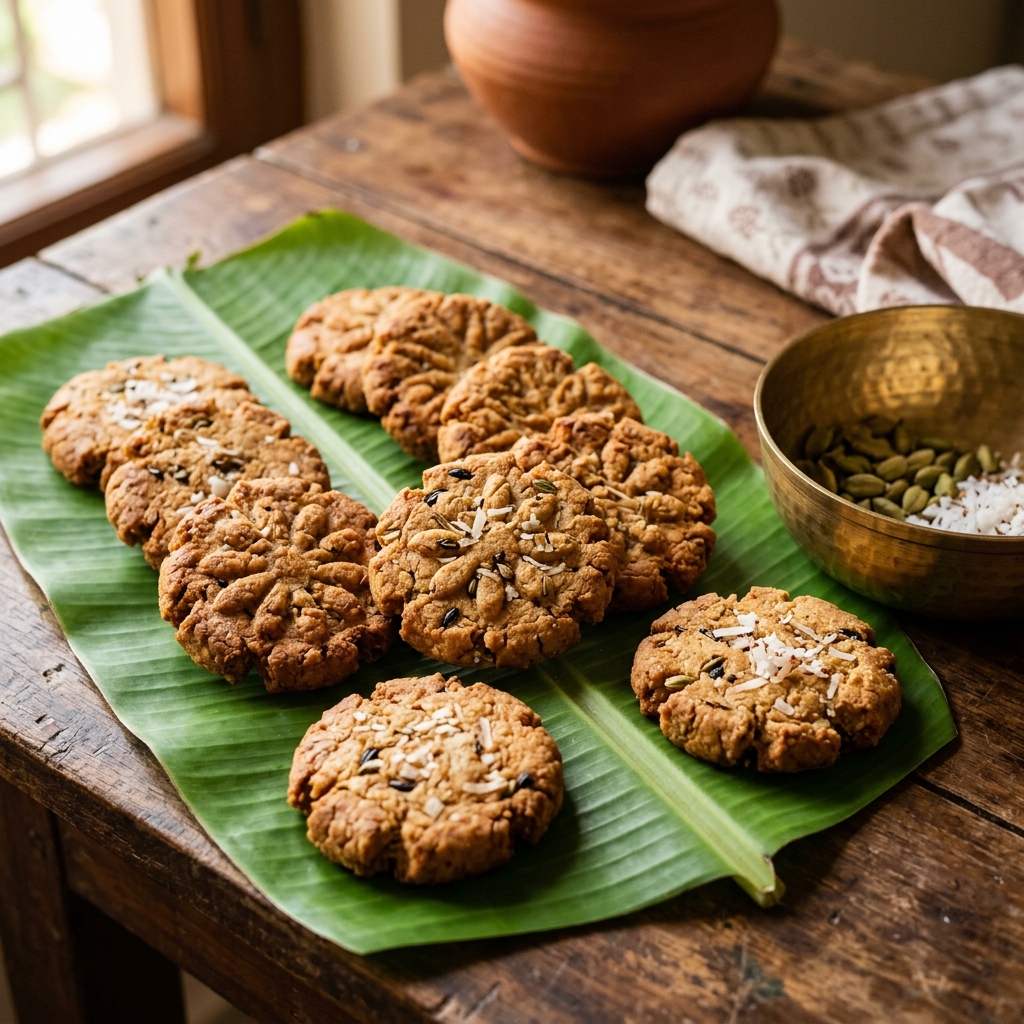
Before sugar refineries arrived in India, jaggery was the default sweetener. Traditional sweets like thekua, tilkut, chikki, and gajak were all designed around jaggery's distinct flavour. This was not a health choice initially — it was the only option available.
But that constraint turned out to be wisdom. These traditional recipes were naturally more nutritious than the sugar-based sweets that replaced them during industrialisation. When families modernised their kitchens, they often traded nutrition for convenience without realising it. The shudd swad of jaggery-based sweets carries centuries of culinary intelligence.
A Practical Guide: When to Choose What
- Traditional Indian sweets (thekua, ladoo, chikki): always jaggery. It is how they were designed to taste.
- Baking (cakes, cookies): sugar works better for texture. Jaggery can make baked goods heavier.
- Daily chai: jaggery works but changes the flavour profile. Worth trying if you are open to it.
- Festivals and religious offerings: jaggery is considered purer and preferred in prasad.
Frequently Asked Questions
Is jaggery calorie-free or low calorie?
No. Jaggery and sugar have nearly identical calorie counts. Jaggery's advantage is in mineral content, not calories. Treat it as a sweetener, not a diet food.
Can I replace sugar with jaggery in all recipes?
Not always. Jaggery has a stronger flavour and behaves differently when heated. It works beautifully in traditional Indian sweets but may need adjustments elsewhere. Browse our jaggery-based products to see how we use it traditionally.
Which type of jaggery is best?
Darker jaggery is less processed and retains more minerals. Look for organic, unrefined jaggery from trusted sources. Avoid bright yellow jaggery — it is often treated with chemicals for uniform colour.
The jaggery vs sugar question has a clear answer for Indian sweets: jaggery is the better choice. It is not perfect, but it is decidedly less imperfect. For more insights into traditional food science, visit our blog.
More to read