1 March 2026
The Story of Thekua in Chhath Puja: More Than Just Prasad
Why is thekua the most sacred prasad of Chhath Puja? Explore its spiritual meaning, preparation rituals, and deep cultural roots in Bihar.
Ask any Bihari about Chhath Puja and within the first minute, thekua will come up. Not as a side dish. Not as one-of-many items. It is the prasad — the central offering, the non-negotiable. Chhath without thekua is like Diwali without diyas. It simply does not count. But why? What makes a humble wheat-and-jaggery sweet so sacred?
Direct answer: thekua is central in Chhath Puja because it uses pure ingredients, travels well to the ghat, and symbolizes devotion through home preparation. For those searching thekua in Chhath Puja story or Chhath prasad significance, it is both food and faith.
For many people, the emotional benchmark remains that moms made taste and comfort.
The Roots of Chhath and Its Food Traditions
Chhath Puja is among the oldest Vedic festivals still practised in its original form. Dedicated to Surya Dev and Chhathi Maiya, it is observed mainly in Bihar, Jharkhand, eastern Uttar Pradesh, and parts of Nepal. The festival involves a 36-hour fast, standing in water, and offering arghya to the rising and setting sun.
The prasad in Chhath is never bought from shops. It is always prepared at home, in a freshly cleaned kitchen, often by the vratin herself. Every ingredient must be pure. Every step must be done with devotion. This is where thekua earns its irreplaceable position.
Why Thekua Is Chhath Puja's Most Important Prasad
Several qualities make thekua the ideal Chhath prasad:
- Pure ingredients: whole wheat, jaggery, and ghee — nothing processed or artificial
- Long natural shelf life: lasts through the multi-day festival without refrigeration
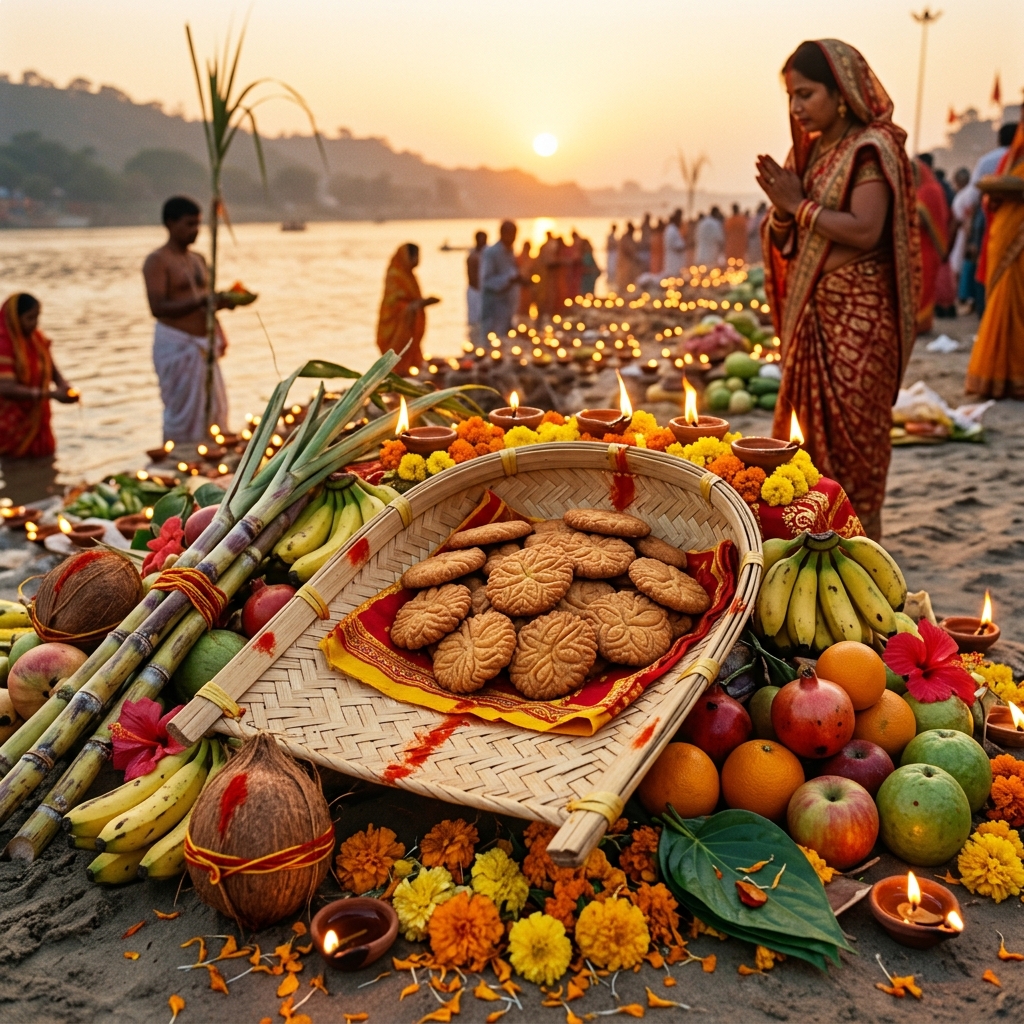
- Travel-friendly: firm texture survives being carried to the ghat in cane baskets
- Symbol of earth and sun: wheat grows from earth, nourished by sunlight. Offering thekua completes the cycle of gratitude.
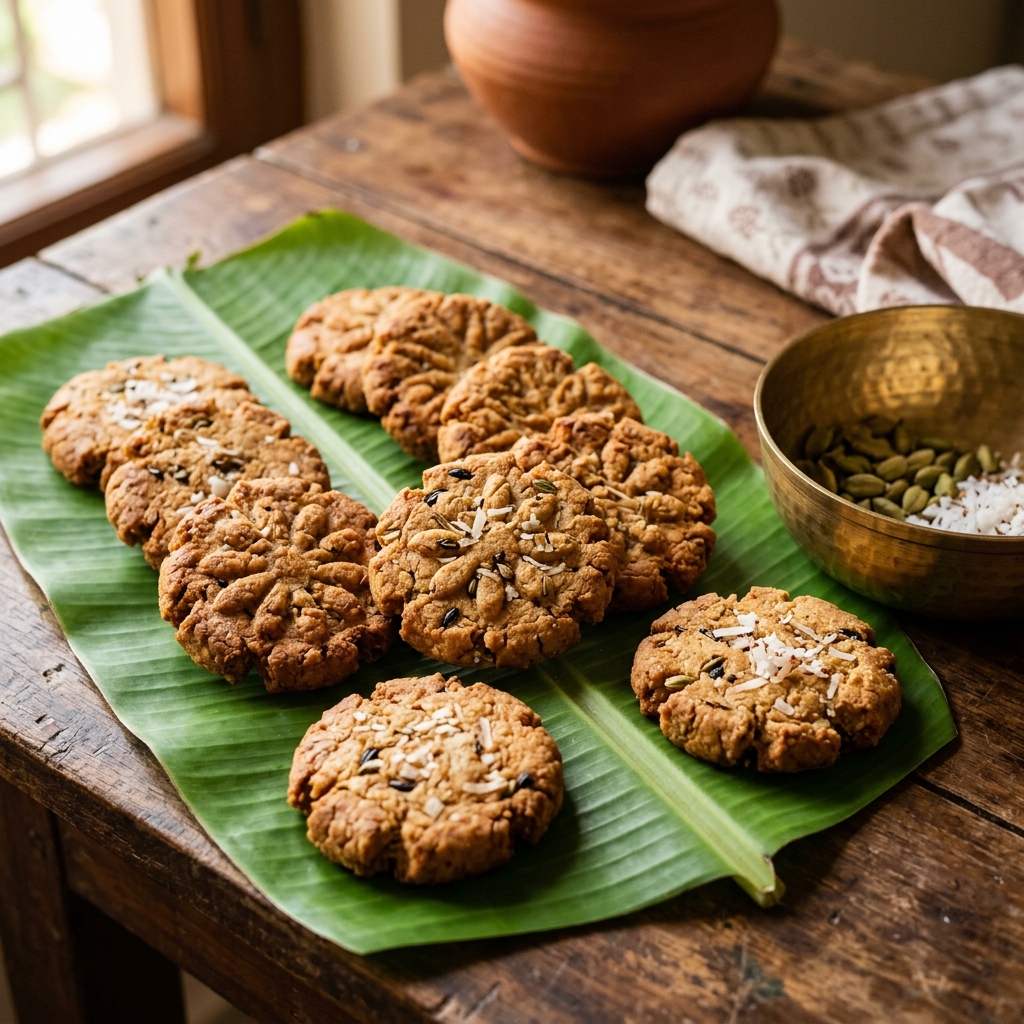
The preparation itself is meditative. Dough is mixed by hand, pressed into ancestral wooden moulds carved with motifs of the sun and flowers, and fried in pure ghee. Each step is performed with prayers. The shudd swad of this thekua is inseparable from the devotion that goes into making it.
The Community Around Thekua Making
In Bihar, Chhath preparation is not a solo activity. It is a community event. Neighbours share kitchens. Aunts arrive with their own jaggery. Children hover near the kadhai, hoping to sneak the first piece.
The night before Chhath, homes across Bihar fill with the warm, sweet aroma of frying thekua. If you have ever been in a Bihari neighbourhood during Chhath, you know this smell. It is the smell of belonging. Every Chhath you have ever known, folded into one evening.
For Biharis living outside the state, this is often the hardest part of being away. You can stand in a river anywhere. But that specific kitchen smell — the sounds of your mother's wooden mould pressing into dough — that is irreplaceable.
How Thekua Preparation Has Evolved
The core recipe has stayed remarkably unchanged for centuries. What has shifted is the context:
- In the past, every household made thekua from scratch. Today, working families in cities often struggle to find time.
- Wooden moulds are becoming harder to find as artisans age out of the craft.
- Some families now bake thekua instead of frying — almost unheard of a generation ago.
- Online ordering has emerged as a solution for families who want authentic thekua but cannot make it at home.
Despite these changes, the standard remains high. Families are unwilling to compromise on the purity of Chhath prasad. If it is not made with genuine ingredients and sincere effort, it does not feel right.
Thekua Across Borders: Nepal and the Diaspora
Chhath is celebrated with equal devotion in Nepal's Terai region, and thekua is just as central. In the Bihari diaspora across the Gulf, the US, and Europe, Chhath gatherings revolve around sourcing or making authentic thekua.
Every year, tutorial videos flood social media in October and November, with grandmothers and young cooks sharing their family recipes. The thekua recipe becomes a thread connecting generations and geographies — a small sweet holding together a very large community.
Frequently Asked Questions
Why is thekua not bought from shops for Chhath?
Chhath tradition requires prasad to be prepared at home with complete purity and devotion. Store-bought items are considered less sacred because you cannot verify the ingredients and intent behind preparation.
Can I use sugar instead of jaggery for Chhath thekua?
Traditionally, jaggery is used because it is less processed and considered purer. Some families do use sugar, but purists maintain that jaggery is the correct choice. For authentic jaggery thekua, explore our collection.
What other items are offered as Chhath prasad?
Apart from thekua, Chhath prasad typically includes seasonal fruits like sugarcane, banana, and coconut, along with other preparations arranged in a soop (winnowing basket). Each item carries specific significance.
Thekua in Chhath is not just food. It is faith shaped into dough, pressed with devotion, and offered to the sun. If stories of Bihar's food heritage interest you, read more on our blog.
More to read