8 February 2026
Thekua vs Khajuria: What's the Real Difference?
Thekua vs khajuria — same sweet or different? Learn how flour, sweetener, and regional names separate these two popular Bihari snacks.
Walk into any Bihari household during a festival and you might hear both words: thekua and khajuria. Some families insist they are the same. Others swear they are different. Ask a group of Bihari expats in Delhi and you will get five different answers. So what is the real story?
Direct answer: thekua and khajuria are mostly the same sweet, with regional naming and minor family-level recipe differences. For searches like thekua vs khajuria difference or are thekua and khajuria same, the base ingredients remain nearly identical.
In many homes, this balance is described as shudd swad with a moms made warmth that feels familiar and honest.
Thekua vs Khajuria: Quick Answer
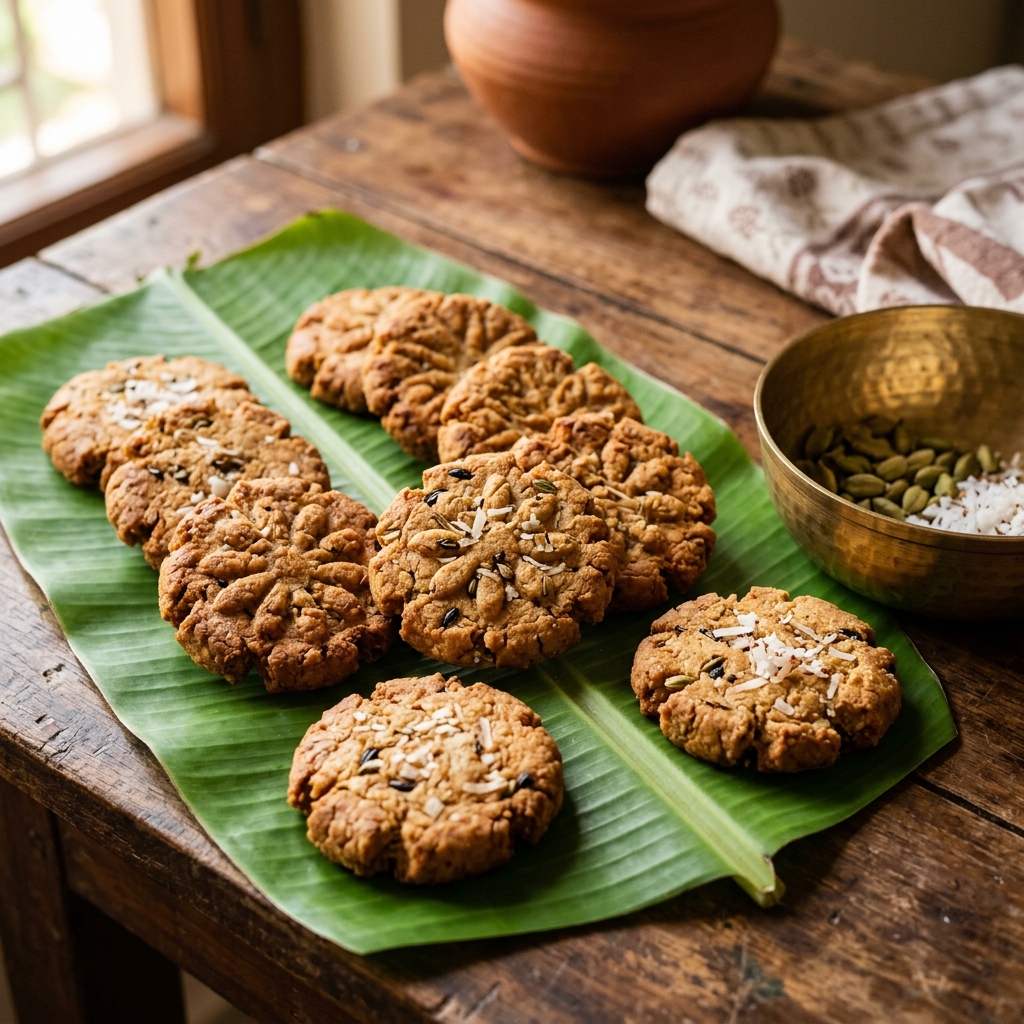
Thekua and khajuria are essentially the same sweet with regional name variations. Both are made from whole wheat flour, jaggery, and ghee, shaped in wooden moulds, and either fried or baked. The core recipe is identical. What changes is the name, depending on where in Bihar, Jharkhand, or eastern UP you are from.
Thekua and Khajuria Name Origins Across Regions
The word "thekua" likely comes from "thekna," which means to press in Bhojpuri. This refers to the dough being pressed into carved wooden moulds to create patterns. The name "khajuria" comes from "khajur" meaning date palm, possibly because early versions used date palm jaggery or because the crisp texture resembled dried dates.
In most of central and northern Bihar — Patna, Muzaffarpur, Darbhanga — people say thekua. In parts of Jharkhand and eastern UP, you will hear khajuria more commonly. Go further into Chhattisgarh and Madhya Pradesh, and you start hearing "thekua" again but sometimes with a slightly different recipe.
Thekua vs Khajuria Differences in Shape, Sweetness, and Texture
In some regions, subtle differences have developed over time:
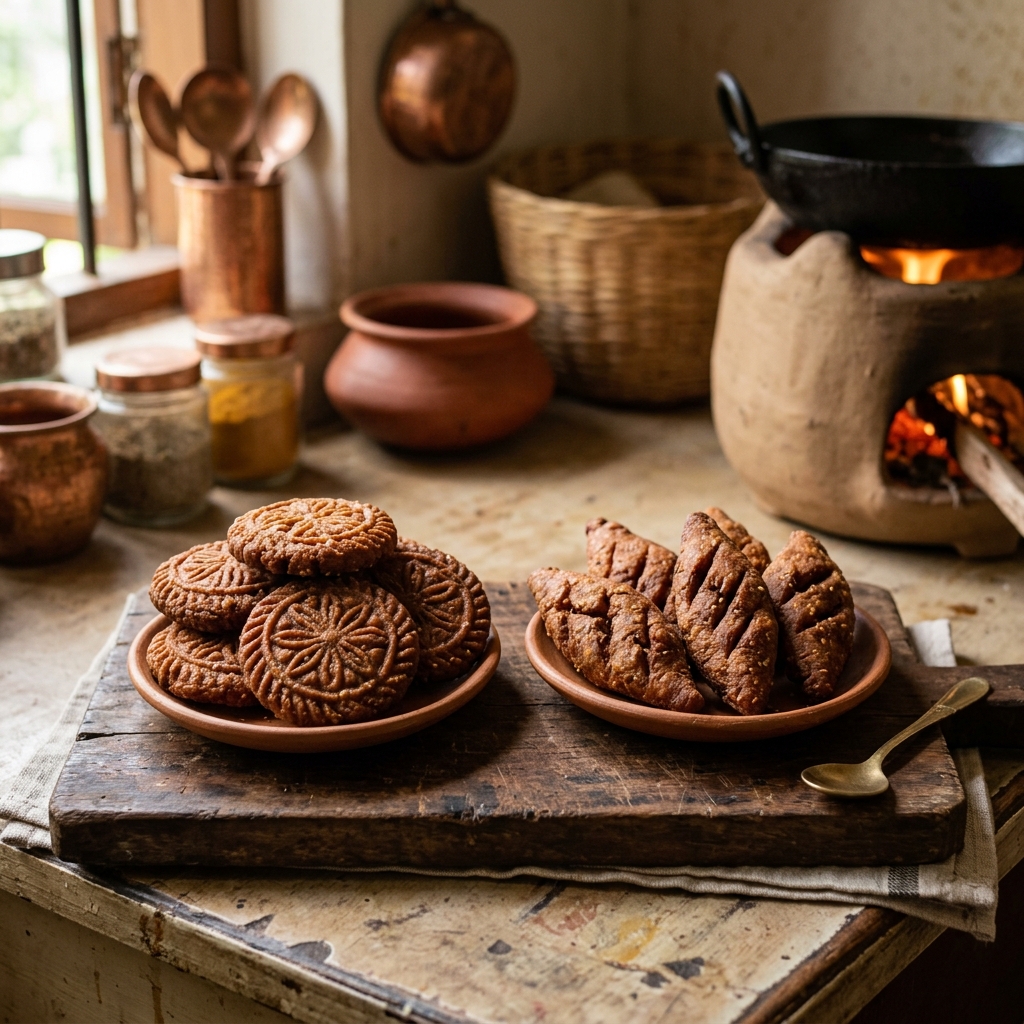
- Shape: thekua is typically round or oval with mould patterns. Some khajuria versions are hand-shaped without a mould.
- Size: khajuria pieces can be slightly thinner and crispier in certain families.
- Sweetness: some khajuria recipes use slightly more jaggery for a deeper sweetness.
- Cooking method: both are traditionally deep-fried, but some regions bake khajuria more commonly.
These differences are more about family tradition than fixed rules. You will find a thekua in one home that looks exactly like a khajuria in the next home across the street.
The Cultural Connection: Why Both Names Survive
Language in Bihar is layered. Maithili, Bhojpuri, Magahi, and Angika speakers each carry their own food vocabulary. The same sweet gets different names not because it is different, but because Bihar's linguistic richness preserves multiple words for the same beloved thing.
This is actually beautiful. When a Bhojpuri-speaking grandmother calls it thekua and her Maithili-speaking neighbour calls it khajuria, they are both describing the same love turned into food. The recipe travelled through marriages, migration, and festivals, picking up new names like souvenirs.
Thekua Beyond Bihar: Nepal and the Diaspora
In Nepal, thekua is almost exactly the same as the Bihari version and remains a major part of Chhath celebrations. Further south in India, similar wheat-jaggery sweets exist under completely different names. The concept of pressing sweetened dough into moulds and frying it in ghee is ancient and widespread.
What makes Bihari thekua and khajuria special is the specific jaggery-to-wheat ratio, the use of coconut and saunf, and the hand-carved moulds that families pass down through generations.
Frequently Asked Questions
Are thekua and khajuria the same thing?
For all practical purposes, yes. They share the same core recipe and preparation method. The name varies by region and family tradition across Bihar, Jharkhand, and eastern UP.
Which one tastes better?
Since the base recipe is the same, the taste depends on the maker, not the name. What matters is fresh jaggery, good quality ghee, and the right ratio. You can explore our traditional thekua to taste how it is meant to be.
Can I use the names interchangeably?
Absolutely. No one will correct you either way. Just be prepared for a spirited debate at the dinner table.
Whether you call it thekua or khajuria, the soul of this sweet is the same: simple ingredients, patient hands, and the warmth of tradition. If this story sparked your curiosity, read more stories on our blog and discover the rich food heritage of Bihar.
More to read