15 October 2026
Kharna Prasad: Rasiya and Roti Recipe, Meaning and Purity Rules
Kharna prasad explained: rasiya (gud ki kheer) and roti for Chhath Puja, its meaning, a simple traditional recipe, and the purity rules families follow.
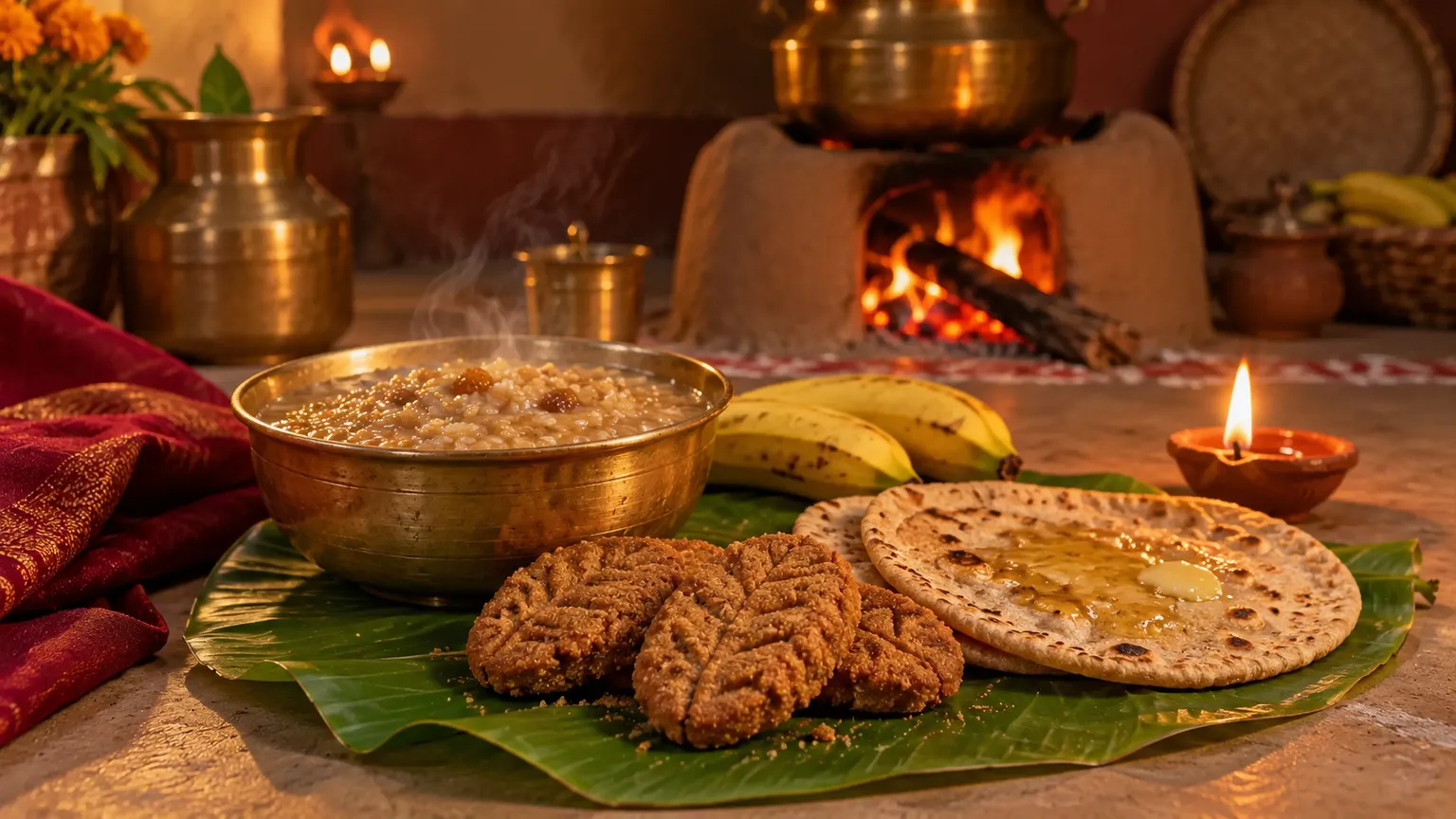
Kharna prasad is the evening offering made on the second day of Chhath Puja. It traditionally consists of rasiya, a kheer made with rice and jaggery, along with wheat roti, and is offered to Chhathi Maiya and the Sun God before the vrati eats it. After eating this prasad, the vrati begins the nirjala fast of about 36 hours that lasts until Usha Arghya.
In Hindi it is called खरना प्रसाद, and the day is also known as Lohanda in some areas. In 2026, Kharna falls on Saturday, 14 November, per most panchangs. Below we explain the meaning of the ritual, a simple Kharna prasad recipe, and the purity rules families follow. Practices vary by family, so please follow your elders where they differ.
Kharna Prasad at a Glance
- Kharna is the second day of Chhath Puja; in 2026 it falls on Saturday, 14 November.
- The prasad is rasiya (rice cooked in milk with jaggery) and wheat roti, often with banana.
- No salt is used, and it is cooked in clean, dedicated utensils, often on a chulha.
- The vrati eats the prasad in the evening and then begins a nirjala fast of about 36 hours.
- In Hindi it is called खरना प्रसाद; some areas call the day Lohanda.
What Is Kharna Prasad in Chhath Puja?
Chhath is a four-day festival. Day one is Nahay Khay, day two is Kharna, day three is Sandhya Arghya and day four is Usha Arghya. See our Chhath Puja 2026 date and schedule for the full timeline.
On Kharna, the vrati fasts through the day. In the evening, after bathing, the vrati prepares the prasad in a cleaned kitchen, often on a new earthen chulha fuelled with mango wood. The prasad is offered, and then the vrati eats it, traditionally in quiet and without interruption. In many homes, the family and neighbours then receive the prasad as a blessing.
The word Kharna is commonly linked to purification. The simple meal of rice, jaggery and wheat prepares the body and mind for the long fast ahead.
What Is Included in Kharna Prasad?
- Rasiya or gud ki kheer (गुड़ की खीर), made with rice, milk and jaggery
- Roti or puri made from wheat flour, often smeared with ghee
- Bananas and other fruits in many homes
- Sometimes a plain sweet roti or pitha, depending on family custom
No salt, onion or garlic is used in Kharna prasad.
Kharna Prasad Recipe: Rasiya (Gud Ki Kheer)
This is a simple, traditional method. Quantities can be adjusted for your family.
Ingredients
- Half cup of good quality rice (arwa chawal is commonly used), washed
- One litre of full-cream milk (some families use part water)
- Jaggery to taste, roughly three-quarters of a cup, grated
- A little ghee and a pinch of cardamom, if your family uses it
Method
- Bring the milk to a boil in a clean, dedicated vessel.
- Add the washed rice and cook on low heat, stirring often so it does not stick.
- When the rice is soft and the milk has thickened, turn off the heat.
- Let it cool for a few minutes, then stir in the grated jaggery. Adding jaggery to very hot milk can make it split.
- Add cardamom and a few drops of ghee if desired.
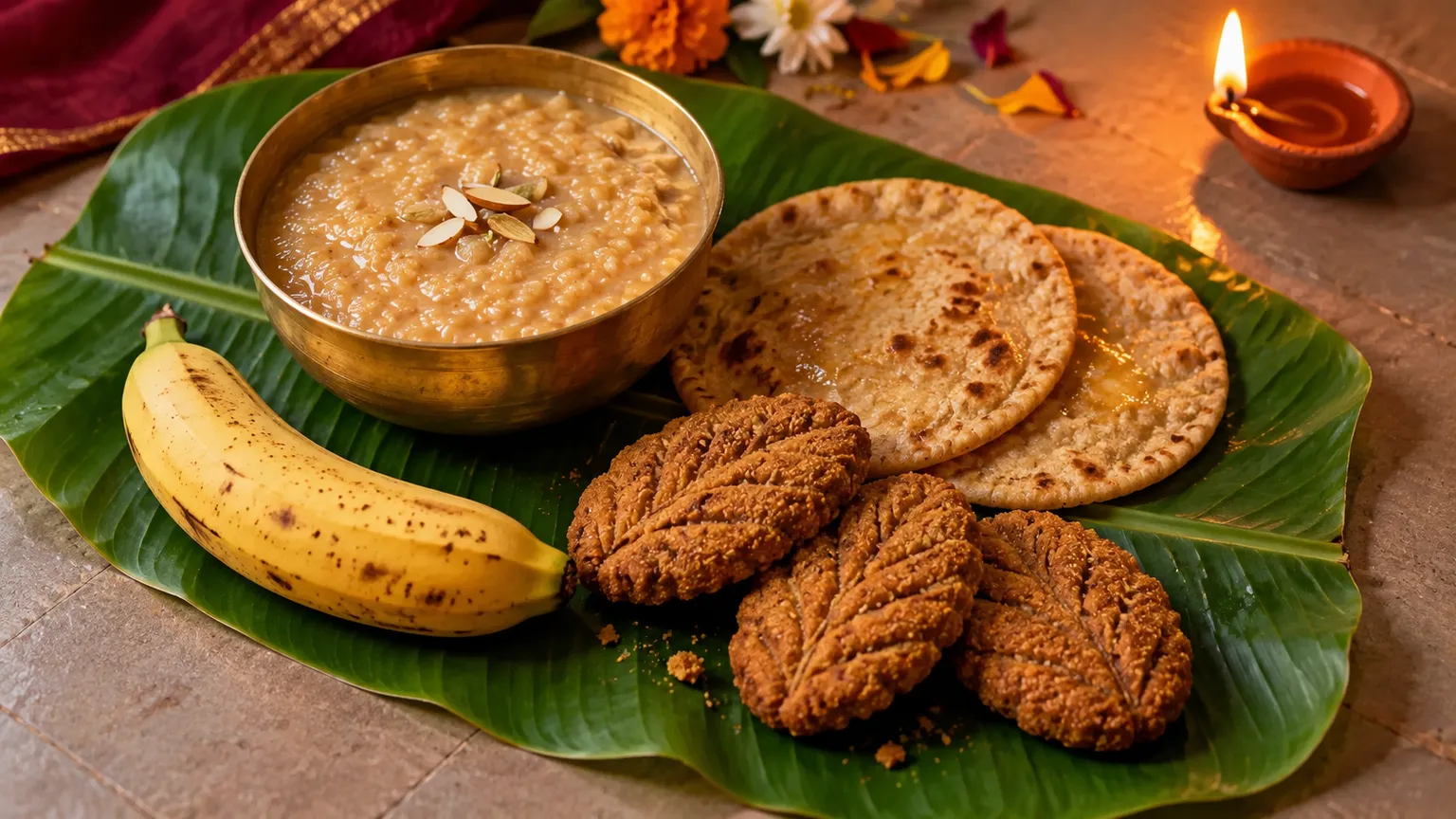
Kharna Roti
Knead whole wheat flour with water into a soft dough. Roll out rotis and cook them on a clean tawa over the chulha. Many families brush them with ghee. Some families make thick, slightly sweet rotis instead. Keep everything simple; Kharna prasad is about purity, not richness.
Purity Rules for Kharna Prasad
- The kitchen, utensils and chulha are cleaned thoroughly; many families use new utensils
- The vrati bathes before cooking and wears clean clothes
- No salt in the prasad, and no onion, garlic or non-vegetarian food in the home during Chhath
- Prasad is not tasted while cooking
- Ingredients are fresh and of good quality: whole wheat, real jaggery and pure ghee
- Family members keep the atmosphere quiet and respectful while the vrati eats
The same care goes into the thekua made on the next day for Sandhya Arghya. Read about thekua's place in Chhath Puja to understand why it is treated with such respect.
Frequently Asked Questions
What is Kharna prasad?
It is the evening prasad of Chhath's second day, usually rasiya (gud ki kheer) with roti, eaten by the vrati before starting the 36-hour nirjala fast.
Is salt used in Kharna prasad?
No. Kharna prasad is made without salt, onion or garlic.
Why is jaggery used instead of sugar in rasiya?
Jaggery is the traditional sweetener and is considered pure for prasad. Learn more about jaggery versus sugar in sweets.
What is Kharna prasad called in Hindi?
It is called खरना प्रसाद. The kheer is called रसियाव or गुड़ की खीर in many Bihari homes.
Prepare for Chhath With Care
As you prepare rasiya and roti this Kharna, we hope your home is filled with peace. For the days ahead, explore our ghee-made, preservative-free thekua for Chhath, made fresh to order and shipped across India.
More to read